A gift of God
May sear unready fingers.
EARTHSEED: THE BOOKS OF THE LIVING
SUNDAY, JULY 21, 2024
At least three years ago, my father’s God stopped being my God. His church stopped being my church. And yet, today, because I’m a coward, I let myself be initiated into that church. I let my father baptize me in all three names of that God who isn’t mine anymore.
My God has another name.
We got up early this morning because we had to go across town to church. Most Sundays, Dad holds church services in our front rooms. He’s a Baptist minister, and even though not all of the people who live within our neighborhood walls are Baptists, those who feel the need to go to church are glad to come to us. That way they don’t have to risk going outside where things are so dangerous and crazy. It’s bad enough that some people—my father for one—have to go out to work at least once a week. None of us goes out to school any more. Adults get nervous about kids going outside.
But today was special. For today, my father made arrangements with another minister—a friend of his who still had a real church building with a real baptistery.
Dad once had a church just a few blocks outside our wall. He began it before there were so many walls. But after it had been slept in by the homeless, robbed, and vandalized several times, someone poured gasoline in and around it and burned it down. Seven of the homeless people sleeping inside on that last night burned with it.
But somehow, Dad’s friend Reverend Robinson has managed to keep his church from being destroyed. We rode our bikes to it this morning—me, two of my brothers, four other neighborhood kids who were ready to be baptized, plus my father and some other neighborhood adults riding shotgun. All the adults were armed. That’s the rule. Go out in a bunch, and go armed.
The alternative was to be baptized in the bathtub at home. That would have been cheaper and safer and fine with me. I said so, but no one paid attention to me. To the adults, going outside to a real church was like stepping back into the good old days when there were churches all over the place and too many lights and gasoline was for fueling cars and trucks instead of for torching things. They never miss a chance to relive the good old days or to tell kids how great it’s going to be when the country gets back on its feet and good times come back.
Yeah.
To us kids—most of us—the trip was just an adventure, an excuse to go outside the wall. We would be baptized out of duty or as a kind of insurance, but most of us aren’t that much concerned with reli gion. I am, but then I have a different religion.
“Why take chances,” Silvia Dunn said to me a few days ago. “Maybe there’s something to all this religion stuff.”
Her parents thought there was, so she was with us.
My brother Keith who was also with us didn’t share any of my beliefs. He just didn’t care. Dad wanted him to be baptized, so what the hell. There wasn’t much that Keith did care about. He liked to hang out with his friends and pretend to be grown up, dodge work and dodge school and dodge church. He’s only twelve, the oldest of my three brothers. I don’t like him much, but he’s my stepmother’s favorite. Three smart sons and one dumb one, and it’s the dumb one she loves best.
Keith looked around more than anyone as we rode. His ambition, if you could call it that, is to get out of the neighborhood and go to Los Angeles. He’s never too clear about what he’ll do there. He just wants to go to the big city and make big money. According to my father, the big city is a carcass covered with too many maggots. I think he’s right, though not all the maggots are in L.A. They’re here, too.
But maggots tend not to be early-morning types. We rode past people stretched out, sleeping on the sidewalks, and a few just waking up, but they paid no attention to us. I saw at least three people who weren’t going to wake up again, ever. One of them was headless. I caught myself looking around for the head. After that, I tried not to look around at all.
A woman, young, naked, and filthy stumbled along past us. I got a look at her slack expression and realized that she was dazed or drunk or something.
Maybe she had been raped so much that she was crazy. I’d heard stories of that happening. Or maybe she was just high on drugs. The boys in our group almost fell off their bikes, staring at her. What wonderful religious thoughts they would be having for a while.
The naked woman never looked at us. I glanced back after we’d passed her and saw that she had settled down in the weeds against someone else’s neighborhood wall.
A lot of our ride was along one neighborhood wall after another; some a block long, some two blocks, some five. . . . Up toward the hills there were walled estates—one big house and a lot of shacky little dependencies where the servants lived. We didn’t pass anything like that today. In fact we passed a couple of neighborhoods so poor that their walls were made up of unmortared rocks, chunks of concrete, and trash. Then there were the pitiful, unwalled residential areas. A lot of the houses were trashed—burned, vandalized, infested with drunks or druggies or squatted in by homeless families with their filthy, gaunt, half-naked children. Their kids were wide awake and watching us this morning. I feel sorry for the little ones, but the ones my age and older make me nervous. We ride down the middle of the cracked street, and the kids come out and stand along the curb to stare at us. They just stand and stare. I think if there were only one or two of us, or if they couldn’t see our guns, they might try to pull us down and steal our bikes, our clothes, our shoes, whatever. Then what? Rape? Murder? We could wind up like that naked woman, stumbling along, dazed, maybe hurt, sure to attract dangerous attention unless she could steal some clothing. I wish we could have given her something.
My stepmother says she and my father stopped to help an injured woman once, and the guys who had injured her jumped out from behind a wall and almost killed them.
And we’re in Robledo—20 miles from Los Angeles, and, according to Dad, once a rich, green, unwalled little city that he had been eager to abandon when he was a young man. Like Keith, he had wanted to escape the dullness of Robledo for big city excitement. L.A. was better then—less lethal. He lived there for 21 years. Then in 2010, his parents were murdered and he inherited their house. Whoever killed them had robbed the house and smashed up the furniture, but they didn’t torch anything. There was no neighborhood wall back then.
Crazy to live without a wall to protect you. Even in Robledo, most of the street poor—squatters, winos, junkies, homeless people in general—are dangerous. They’re desperate or crazy or both. That’s enough to make anyone dangerous.
Worse for me, they often have things wrong with them. They cut off each other’s ears, arms, legs. . . . They carry untreated diseases and festering wounds. They have no money to spend on water to wash with so even the unwounded have sores. They don’t get enough to eat so they’re malnourished—or they eat bad food and poison themselves. As I rode, I tried not to look around at them, but I couldn’t help seeing—collecting—some of their general misery. I can take a lot of pain without falling apart. I’ve had to learn to do that. But it was hard, today, to keep pedaling and keep up with the others when just about everyone I saw made me feel worse and worse.
My father glanced back at me every now and then. He tells me, “You can beat this thing. You don’t have to give in to it.” He has always pretended, or perhaps believed, that my hyperempathy syndrome was something I could shake off and forget about. The sharing isn’t real, after all. It isn’t some magic or ESP that allows me to share the pain or the pleasure of other people. It’s delusional. Even I admit that. My brother Keith used to pretend to be hurt just to trick me into sharing his supposed pain. Once he used red ink as fake blood to make me bleed. I was eleven then, and I still bled through the skin when I saw someone else bleeding. I couldn’t help doing it, and I always worried that it would give me away to people outside the family.
I haven’t shared bleeding with anyone since I was twelve and got my first period. What a relief that was. I just wish all the rest of it had gone away, too. Keith only tricked me into bleeding that once, and I beat the hell out of him for it. I didn’t fight much when I was little because it hurt me so. I felt every blow that I struck, just as though I’d hit myself. So when I did decide that I had to fight, I set out to hurt the other kid more than kids usually hurt one another. I broke Michael Talcott’s arm and Rubin Quintanilla’s nose. I knocked out four of Silvia Dunn’s teeth. They all earned what I did to them two or three times over. I got punished every time, and I resented it. It was double punishment, after all, and my father and stepmother knew it. But knowing didn’t stop them. I think they did it to satisfy the other kids’ parents. But when I beat up Keith, I knew that Cory or Dad or both of them would punish me for it—my poor little brother, after all. So I had to see that my poor little brother paid in advance. What I did to him had to be worthwhile in spite of what they would do to me.
It was.
We both got it later from Dad—me for hurting a younger kid and Keith for risking putting “family business” into the street. Dad is big on privacy and “family business.” There’s a whole range of things we never even hint about outside the family. First among these is any thing about my mother, my hyperempathy, and how the two are connected. To my father, the whole business is shameful. He’s a preacher and a professor and a dean. A first wife who was a drug addict and a daughter who is drug damaged is not something he wants to boast about. Lucky for me. Being the most vulnerable person I know is damned sure not something I want to boast about.
I can’t do a thing about my hyperempathy, no matter what Dad thinks or wants or wishes. I feel what I see others feeling or what I believe they feel. Hyperempathy is what the doctors call an “organic delusional syndrome.” Big shit. It hurts, that’s all I know. Thanks to Paracetco, the small pill, the Einstein powder, the particular drug my mother chose to abuse before my birth killed her, I’m crazy. I get a lot of grief that doesn’t belong to me, and that isn’t real. But it hurts.
I’m supposed to share pleasure and pain, but there isn’t much pleasure around these days. About the only pleasure I’ve found that I enjoy sharing is sex. I get the guy’s good feeling and my own. I almost wish I didn’t. I live in a tiny, walled fish-bowl cul-de-sac community, and I’m the preacher’s daughter. There’s a real limit to what I can do as far as sex goes.
Anyway, my neurotransmitters are scrambled and they’re going to stay scrambled. But I can do okay as long as other people don’t know about me. Inside our neighborhood walls I do fine. Our rides today, though, were hell. Going and coming, they were all the worst things I’ve ever felt—shadows and ghosts, twists and jabs of unexpected pain.
If I don’t look too long at old injuries, they don’t hurt me too much. There was a naked little boy whose skin was a mass of big red sores; a man with a huge scab over the stump where his right hand used to be; a little girl, naked, maybe seven years old with blood running down her bare thighs. A woman with a swollen, bloody, beaten face. . .
I must have seemed jumpy. I glanced around like a bird, not letting my gaze rest on anyone longer than it took me to see that they weren’t coming in my direction or aiming anything at me.
Dad may have read something of what I was feeling in my expression. I try not to let my face show anything, but he’s good at reading me. Sometimes people say I look grim or angry. Better to have them think that than know the truth. Better to have them think anything than let them know just how easy it is to hurt me.
Dad had insisted on fresh, clean, potable water for the baptism. He couldn’t afford it, of course. Who could? That was the other reason for the four extra kids:
Silvia Dunn, Hector Quintanilla, Curtis Talcott, and Drew Balter, along with my brothers Keith and Marcus. The other kids’ parents had helped with costs. They thought a proper baptism was important enough to spend some money and take some risks. I was the oldest by about two months. Curtis was next. As much as I hated being there, I hated even more that Curtis was there. I care about him more than I want to. I care what he thinks of me. I worry that I’ll fall apart in public some day and he’ll see. But not today.
By the time we reached the fortress-church, my jaw-muscles hurt from clinching and unclinching my teeth, and overall, I was exhausted.
There were only five or six dozen people at the service—enough to fill up our front rooms at home and look like a big crowd. At the church, though, with its surrounding wall and its security bars and Lazor wire and its huge hollowness inside, and its armed guards, the crowd seemed a tiny scattering of people. That was all right. The last thing I wanted was a big audience to maybe trip me up with pain.
The baptism went just as planned. They sent us kids off to the bathrooms (“men’s,” “women’s,” “please do not put paper of any kind into toilets,” “water for washing in bucket at left. . . .”) to undress and put on white gowns. When we were ready, Curtis’s father took us to an anteroom where we could hear the preaching—from the first chapter of Saint John and the second chapter of The Acts—and wait our turns.
My turn came last. I assume that was my father’s idea. First the neighbor kids, then my brothers, then me. For reasons that don’t make a lot of sense to me, Dad thinks I need more humility. I think my particular biological humility—or humiliation—is more than enough.
What the hell? Someone had to be last. I just wish I could have been courageous enough to skip the thing altogether. So, “In the name of the Father, the Son, and the Holy Ghost. . . .” Catholics get this stuff over with when they’re babies. I wish Baptists did. I almost wish I could believe it was important the way a lot of people seem to, the way my father seems to. Failing that, I wish I didn’t care.
But I do. The idea of God is much on my mind these days. I’ve been paying attention to what other people believe— whether they believe, and if so what kind of God they believe in. Keith says God is just the adults’ way of trying to scare you into doing what they want. He doesn’t say that around Dad, but he says it. He believes in what he sees, and no matter what’s in front of him, he doesn’t see much. I suppose Dad would say that about me if he knew what I believe. Maybe he’d be right. But it wouldn’t stop me from seeing what I see.
A lot of people seem to believe in a big-daddy-God or a big cop-God or a big-king-God. They believe in a kind of super-person. A few believe God is another word for nature. And nature turns out to mean just about anything they happen not to understand or feel in control of.
Some say God is a spirit, a force, an ultimate reality. Ask seven people what all of that means and you’ll get seven different answers. So what is God? Just another name for whatever makes you feel spe cial and protected?
There’s a big, early-season storm blowing itself out in the Gulf of Mexico. It’s bounced around the Gulf, killing people from Florida to Texas and down into Mexico. There are over 700 known dead so far. One hurricane. And how many people has it hurt? How many are going to starve later because of destroyed crops? That’s nature. Is it God? Most of the dead are the street poor who have nowhere to go and who don’t hear the warnings until it’s too late for their feet to take them to safety. Where’s safety for them anyway? Is it a sin against God to be poor?
We’re almost poor ourselves. There are fewer and fewer jobs among us, more of us being born, more kids growing up with nothing to look forward to. One way or another, we’ll all be poor some day. The adults say things will get better, but they never have. How will God—my father’s God—behave toward us when we’re poor?
Is there a God? If there is, does he (she? it?) care about us? Deists like Benjamin Franklin and Thomas Jefferson believed God was something that made us, then left us on our own.
“Misguided,” Dad said when I asked him about Deists. “They should have had more faith in what their Bibles told them.” I wonder if the people on the Gulf Coast still have faith. People have had faith through horrible disasters before. I read a lot about that kind of thing. I read a lot, period. My favorite book of the Bible is Job. I think it says more about my father’s God in particular and gods in general than anything else I’ve ever read.
In the book of Job, God says he made everything and he knows everything so no one has any right to question what he does with any of it. Okay. That works. That Old Testament God doesn’t violate the way things are now. But that God sounds a lot like Zeus—a super-powerful man, playing with his toys the way my youngest brothers play with toy soldiers. Bang, bang! Seven toys fall dead. If they’re yours, you make the rules. Who cares what the toys think. Wipe out a toy’s family, then give it a brand new family. Toy children, like Job’s children, are interchangeable.
Maybe God is a kind of big kid, playing with his toys. If he is, what difference does it make if 700 people get killed in a hurricane— or if seven kids go to church and get dipped in a big tank of expensive water?
But what if all that is wrong? What if God is something else altogether?


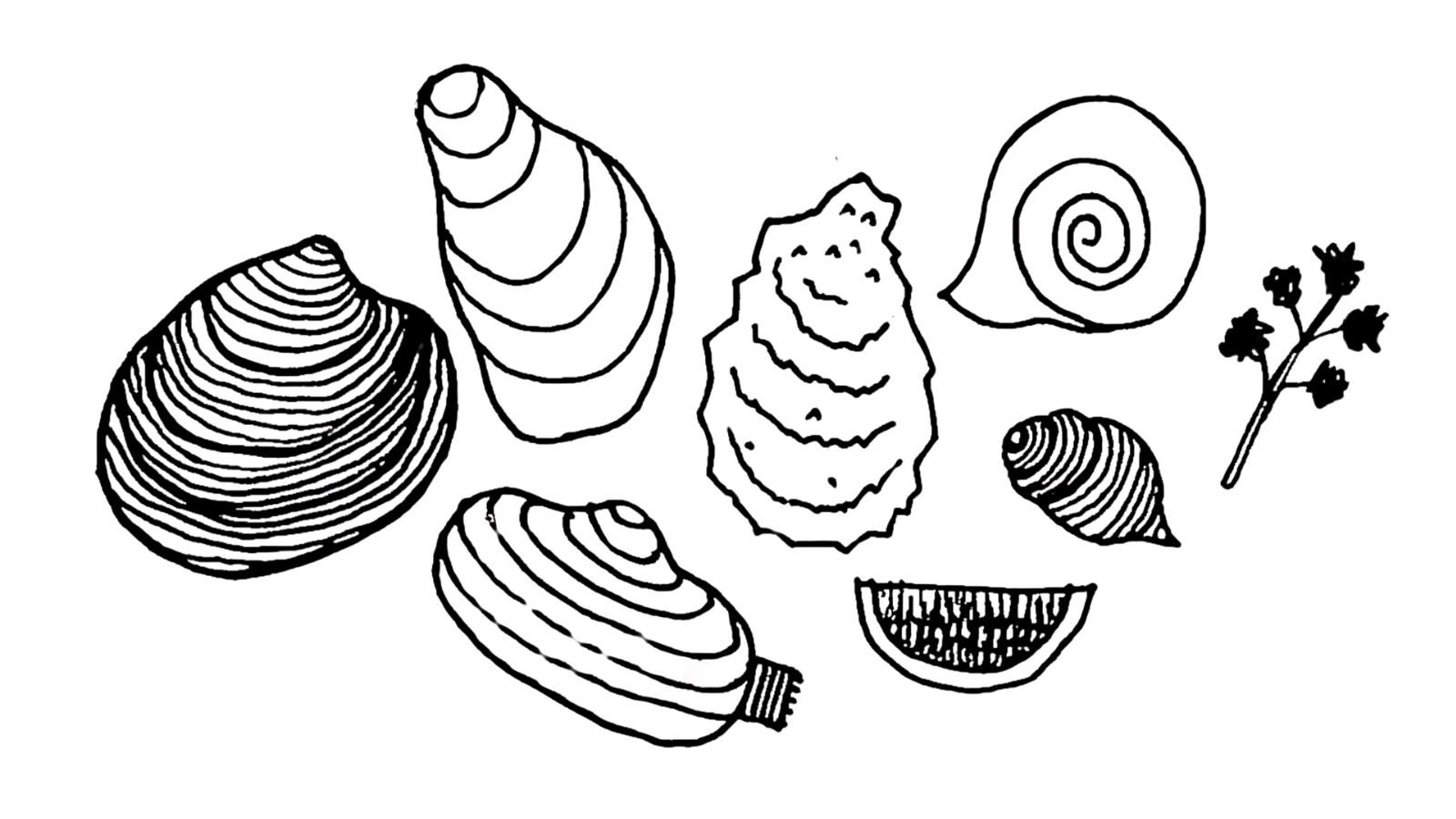
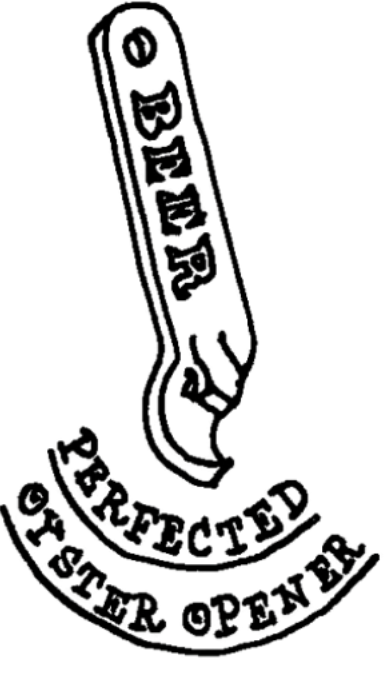 He put his recipes in context. Told you where they came from, what inspired them, convinced you that he loved them and that you should love them too. He was way, way ahead of his time in his embrace of so-called trash fish. And he understood always that the best place to enjoy seafood was on the beach, among friends, in a pretense-free zone, preferably accompanied by many drinks, or at the beloved Cookie’s Tap, whose squid stew he appropriated after much experimentation. That’s a recipe I still cook today—one that I’ve gotten a lot of mileage out of over the years.